
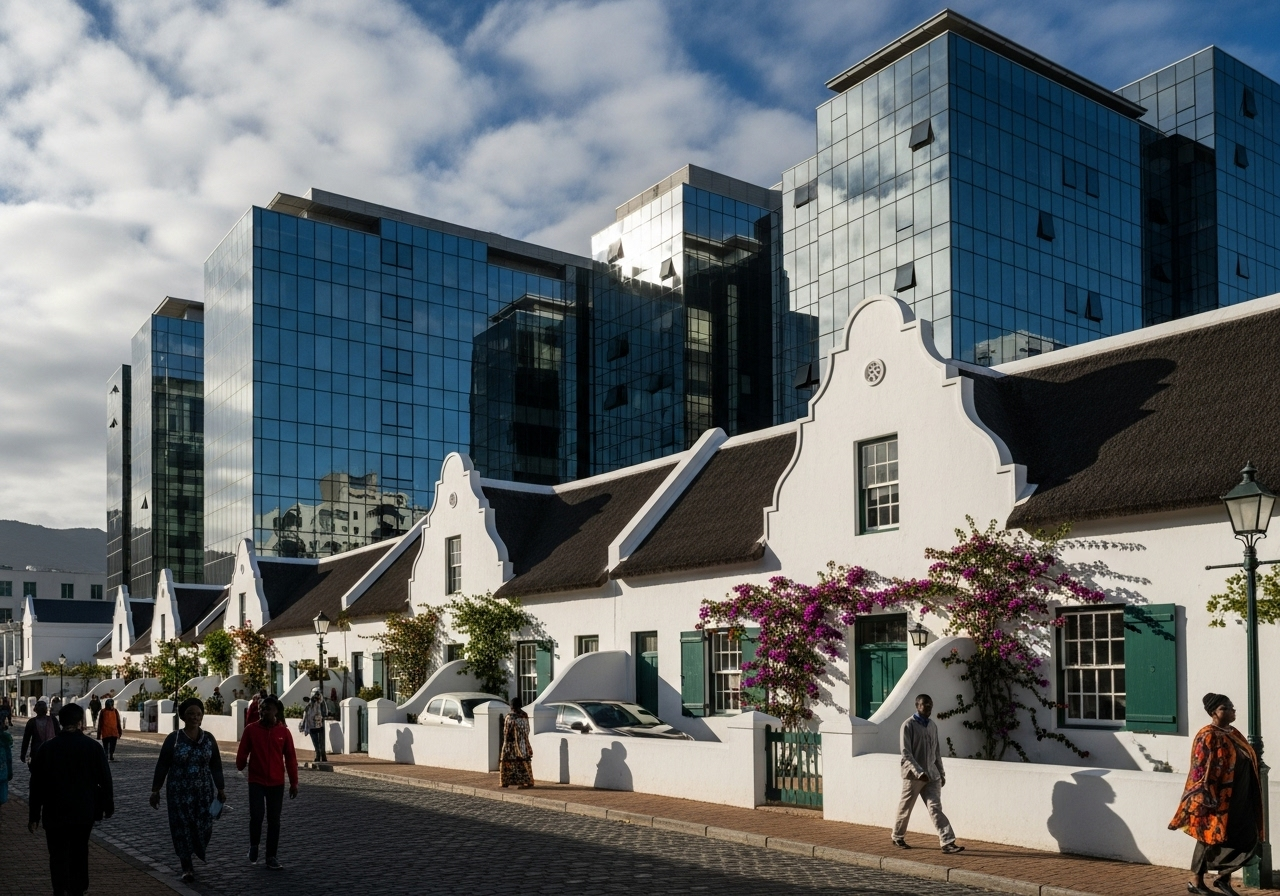
 Johannesburg, the bustling economic powerhouse of South Africa, stands as a testament to the transformative power of urban architecture. As the city’s population swells toward 6 million and beyond, architects Johannesburg are the unsung heroes steering its evolution from a gold-rush outpost to a modern metropolis. Their designs not only address spatial constraints but also weave in social equity, sustainability, and cultural vibrancy. In this article, we explore how these professionals are reshaping Jozi’s skyline and neighborhoods, drawing on innovative tools and collaborative efforts to tackle urban challenges head-on.
Historical Foundations and Modern Revival
Johannesburg’s architectural narrative began with the angular grit of mining-era structures, evolving through apartheid’s fragmented urban planning into today’s inclusive designs. Architects Johannesburg have been instrumental in revitalizing decaying inner-city areas, turning forgotten precincts into thriving communities. Take Ludwig Hansen Architects + Urban Designers, whose projects focus on regeneration, blending high-density housing with green spaces to foster connectivity. Their work echoes the broader shift toward adaptive reuse, where old warehouses become mixed-use hubs, preserving heritage while injecting economic vitality.
A prime example is the Maboneng Precinct, where commercial architects collaborated to convert industrial relics into creative districts. This initiative not only boosted property values but also created jobs, illustrating how Gauteng architects integrate economic and social goals. As urban density rises, these professionals employ lidar scanning to map existing infrastructures with precision, identifying opportunities for infill developments that minimize disruption.
Key Projects Driving Urban Renewal
Recent years have seen a surge in flagship projects led by architects Johannesburg. The AZA2025 conference, set for August in Joburg, highlights this momentum, uniting over 1,500 professionals to discuss sustainability and AI in urban design. One standout is GAPP Architects and Urban Designers’ Moreland Millennium Bridge, a pedestrian link that enhances connectivity in underserved areas, promoting public transport and reducing carbon footprints.
dhk Architects’ Olympus Sandton exemplifies luxury urbanism, with its sleek towers incorporating biophilic elements for resident well-being. Meanwhile, Boogertman + Partners’ portfolio spans graphic design to urban planning, including the Forest House, which uses native landscaping to combat urban heat islands. These projects underscore the role of commercial architects in attracting investment, while Gauteng architects ensure scalability across the province.
Student housing architects are also pivotal, addressing the youth influx with modular designs like those from A4AC Architects, which provide affordable, secure residences near universities. Lidar scanning plays a crucial role here, enabling accurate site assessments for elevated structures in flood-prone zones.
Integrating Technology and Community Focus
Technology is a game-changer in Johannesburg’s urban toolkit. Lidar scanning allows architects to create 3D models of complex terrains, facilitating designs that respect topography—vital in a city built on rocky ridges. For instance, in the redevelopment of the Carlton Centre, lidar data informed retrofits that transformed Africa’s tallest building into a mixed-use beacon.
Community engagement is equally vital. Architects Johannesburg, through forums like the Gauteng Institute for Architecture (GIFA), prioritize participatory design. The South Africa (SA) Architects Rally in 2024 tackled housing shortages amid urban growth, yielding prototypes for inclusive townships. Commercial architects in these efforts balance profit with public good, designing retail nodes that double as social anchors.
Challenges and Collaborative Solutions
Urban development isn’t without hurdles: inequality, infrastructure strain, and climate vulnerabilities loom large. Yet, Gauteng architects are innovating solutions, like Sumayya Vally’s community-uniting designs that bridge divides. Student housing architects face acute demand, with deficits nearing 200,000 beds, but opportunities arise in public-private partnerships for eco-friendly dorms.
In conclusion, architects Johannesburg are the architects of a more equitable Jozi, leveraging lidar scanning, commercial savvy, and forward-thinking designs to navigate urban complexities. As projects like AZA2025 inspire global dialogue, their work promises a city where development uplifts all residents, blending heritage with horizon-expanding ambition.